
Bloom Skin 2026: The K-Beauty Trend That’s Replacing Glass Skin for Good
For nearly a decade, glass skin ruled the K-beauty conversation. The look — hyper-reflective, poreless, almost mirror-like — defined an entire era of Korean skincare and sent the global beauty industry scrambling for the right essence, serum, and sheet mask. But if you’ve been watching Seoul’s dermatology clinics and beauty editors’ feeds in early 2026, you’ll have noticed a quiet shift. Glass skin is out. Bloom skin is in — and the reasons why tell us something profound about where beauty is headed.
At DiscoverKoreaNow, we track K-beauty from the source. According to Refinery29, integrated facialist April Brodie calls this “the most significant aesthetic evolution in Korean skincare right now.” Vogue echoes that view, pointing to bio-regenerative actives — the ingredients that power this shift — as the defining force shaping K-beauty in 2026.
What Is Bloom Skin? (And Why It’s Replacing Glass Skin)
Bloom skin is a Korean skincare philosophy that prioritizes hydrated, strengthened, and even-toned skin that looks naturally luminous — not glossy, not filtered, not artificial. Think of a flower in its healthiest state: soft, plump, full of life from the inside out. That’s the visual and conceptual target.
The Core Contrast: Healthy Glow vs. Surface Shine
- Glass skin chases surface perfection — a reflective, ultra-smooth finish achieved through intensive layering. The goal is visual: look poreless, look polished.
- This new approach prioritizes skin health over appearance. The luminosity is a byproduct of a strong barrier, deep hydration, and cellular repair — not a surface effect applied on top.
Dr. Jenovia Daun Jung, Founder of KorinMi, put it plainly in Moneycontrol: “It is a philosophy that refers to skin that radiates health from within — naturally luminous, deeply hydrated, plump, and balanced. The focus is on supporting the skin barrier so that the skin can maintain hydration, resilience, and clarity on its own.”
Glass skin looked like your skin filtered. This new aesthetic looks like your skin on its absolute best day, naturally. In 2026, consumers burned out by overcomplicated routines are choosing inside-out health over outside-in appearances — and Korean brands are delivering the science to make it achievable.
The Science Behind the Look: Key Ingredients
What makes this trend more than a buzzword is the ingredient science backing it up. K-beauty’s biotech revolution is delivering actives once limited to dermatology clinics, now bottled for daily use.
PDRN (Polydeoxyribonucleotide)
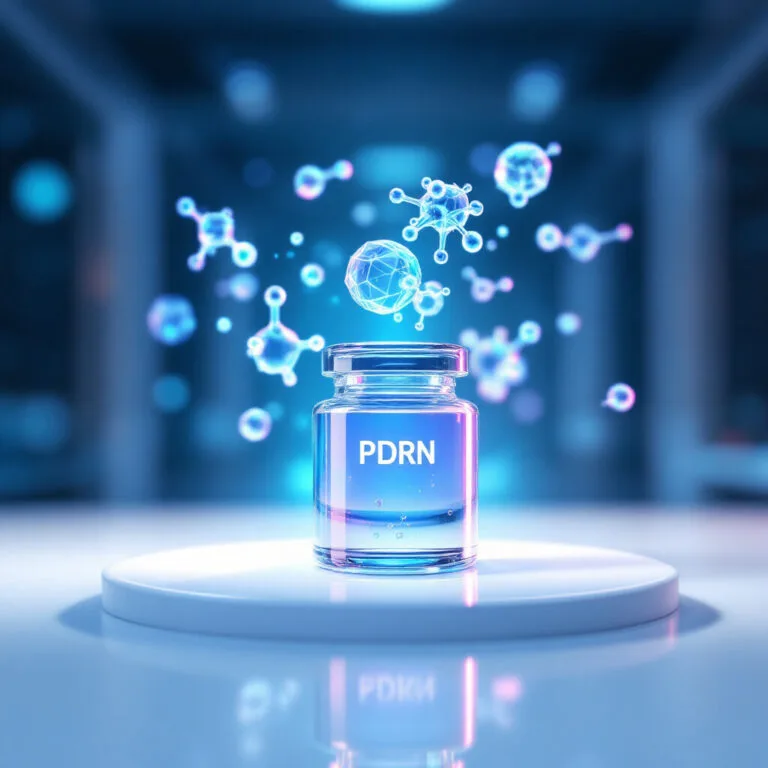
PDRN serums are the star ingredient of the moment. Sales surged 53% on Olive Young — South Korea’s leading beauty retailer — over the past year alone. Derived from salmon DNA, PDRN supports collagen synthesis, reduces hyperpigmentation, calms inflammation, and accelerates barrier repair. According to Glamour’s 2026 PDRN roundup, it has become “essential for delicate or compromised skin,” particularly effective at calming redness and restoring resilience after treatments.
Centella Asiatica
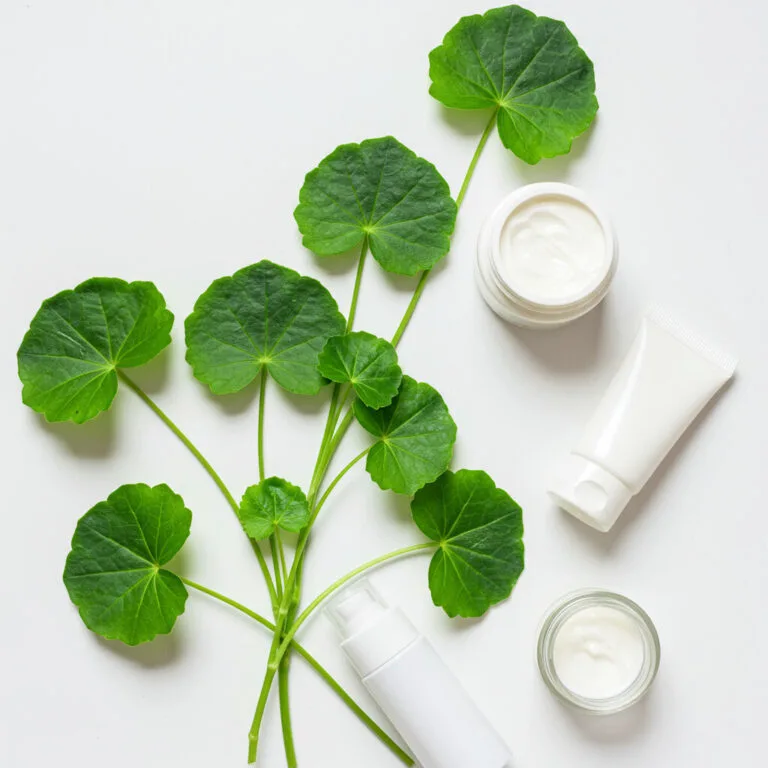
Centella — also called cica or tiger grass — has seen an extraordinary +1,500% increase in Amazon mentions over the past 12 months. It’s anti-inflammatory, wound-healing, and rich in compounds that stimulate collagen production. For the luminous, healthy finish this trend is known for, centella is foundational: it calms while it repairs, making it suitable even for reactive, sensitized complexions.
Exosomes
Exosomes are tiny extracellular vesicles — the body’s cellular messenger system — and they represent the frontier of K-beauty biotech. As Seoul 4PM’s 2026 trend report notes, Korean derma brands have made exosome skincare “the fastest-growing ingredient in the K-beauty landscape,” offering clinic-grade renewal at consumer prices. These serums support barrier recovery and produce that soft, healthy luminosity that defines the aesthetic.
Bio-Fermented Actives
Fermentation has always been a pillar of Korean skincare, but 2026’s version is more sophisticated. Lab-engineered botanicals and bio-fermented actives — processed to enhance bioavailability and reduce irritation — are now the building blocks of what Refinery29 calls K-beauty’s “smart beauty” evolution. These ingredients feed the microbiome and work synergistically with the skin’s own repair mechanisms.
How to Build a Korean Bloom Skin Routine
The beauty of this approach is that it rewards consistency over complexity. As April Brodie told Refinery29: “The globally admired Korean glow comes from disciplined routines, skin-barrier respect, and scientifically supported formulations — not viral products.”
Morning Routine
- Gentle Cleanse — A pH-balanced, low-foam cleanser that removes impurities without stripping your acid mantle.
- Hydrating Toner — A centella or PDRN-infused toner to prep skin for layering. Pat, don’t wipe.
- Treatment Serum — Your PDRN or exosome serum. Press into slightly damp skin for maximum absorption.
- Lightweight Moisturizer — A gel-cream or ceramide formula that strengthens the barrier without occluding it.
- SPF 50+ — Non-negotiable. UV exposure undoes barrier repair and disrupts the microbiome.
Evening Routine
- Double Cleanse — Oil cleanser followed by a water-based cleanser, removing SPF and pollution without over-stripping.
- Gentle Exfoliation (2–3x per week) — A low-concentration PHA or enzyme exfoliant to encourage cell turnover.
- Hydration Layering — Toner, then essence, then serum. Multiple thin layers outperform one heavy application.
- Barrier Repair Cream — A ceramide-rich or fermented active formula to support overnight regeneration.
Top K-Beauty Products to Try in 2026
The global market has responded with a wave of targeted launches. Here are the standout products leading the category right now:
- TirTir Milk Skin Toner — TirTir has emerged as one of the leading K-beauty brands for barrier-first formulations that prioritize healthy skin function over surface aesthetics.
- Torriden DIVE-IN Low Molecular Hyaluronic Acid Serum — Multi-weight HA that hydrates at multiple depths, creating the plump, bouncy texture central to the look.
- Medicube PDRN Pink Cica Soothing Toner ($33) — Combines PDRN with centella for skin repair and deep hydration in one step, as highlighted by Refinery29.
- Skin1004 Madagascar Centella Toner ($22.99) — A pure centella formula that excels at barrier strengthening and calming reactive skin.
- Mixsoon Collagen Gel-Cream — A standout 2026 product per Vogue, pairing collagen support with the lightweight textures K-beauty is known for.
- Medicube Exosome Serum — Available in varying intensities, this has seen strong uptake in the US market according to Vogue’s 2026 K-beauty report.
Beyond the Face: Scalp, Hair, and Holistic Skin Health
One of the most compelling aspects of the bloom skin movement is how its philosophy is expanding beyond facial skincare entirely. K-beauty’s “skinification of haircare” applies the same principle to the scalp: treat it like skin, prioritize the microbiome, and nourish from the follicle outward.
As Refinery29 reports, “scalp serums, microbiome-supporting shampoos, and follicle-focused treatments are becoming standard” in K-beauty routines in 2026. Korean brands are formulating scalp PDRN treatments, centella-infused shampoos, and exosome haircare lines that mirror the facial skincare boom.
The broader vision is a holistic skin-health ecosystem connecting facial health, scalp health, internal microbiome balance, and lifestyle. At DiscoverKoreaNow, we see this expansion as one of the most exciting developments in K-beauty’s history.
FAQ: Bloom Skin Explained
What exactly is bloom skin?
It is a Korean skincare philosophy focused on achieving skin that is hydrated, barrier-strong, even-toned, and naturally luminous. The glow is a natural result of a repaired barrier and deep cellular hydration — not a surface effect. Think of it as skin that looks healthy because it genuinely is.
How does bloom skin differ from glass skin?
Glass skin emphasizes a hyper-reflective, poreless finish achieved through intensive layering and exfoliation. The newer K-beauty ideal focuses on inside-out health: a softer, organic luminosity from consistent barrier repair and microbiome balance. One looks filtered; the other looks genuinely healthy.
What ingredients define a Korean bloom skin routine?
The four defining categories for K-beauty 2026 trends are: PDRN (barrier repair and collagen stimulation), Centella asiatica (anti-inflammatory barrier support), exosomes (cellular regeneration), and bio-fermented actives (microbiome balance). Supporting ingredients include ceramides, niacinamide, panthenol, and multi-weight hyaluronic acid.
Do I need a complex routine to achieve the bloom skin look?
No — simplicity and consistency are the whole point. Five focused steps are all you need: a gentle cleanser, a hydrating toner, one targeted treatment serum, a barrier-supportive moisturizer, and SPF. Consistency with fewer, better products beats a 10-step routine every time.
The New Era of Korean Beauty Has Arrived
What this trend represents is a maturation of the global skincare conversation. After years of chasing aesthetic ideals — poreless perfection, glossy finishes, airbrushed filters made real — consumers and skincare experts are returning to something fundamental: skin that is genuinely, verifiably healthy. It’s the K-beauty 2026 trends philosophy distilled to its essence: build the barrier, feed the microbiome, and let your skin do the rest.
The ingredients are here. The routines are proven. The brands leading the charge — TirTir, Torriden, Medicube, Skin1004 — are delivering clinical results at accessible price points. The only thing left is to start.
Follow DiscoverKoreaNow for the latest K-beauty trend coverage, product reviews, and expert-led routines straight from Seoul. Whether you’re new to Korean skincare or a seasoned devotee, we’re here to help you discover what K-beauty can do for your skin — and your life.