
Glass Skin vs. Glazed Donut Skin: What Korean Beauty Actually Teaches Us in 2026
Glass skin and glazed donut skin photograph the same. They both look like your skin is doing something impressive, and most people use them interchangeably. Here’s the catch — they come from completely different philosophies, work through entirely different mechanisms, and chasing the wrong one for your skin type leads straight to disappointment. Or a very oily nose by noon.
This guide defines both trends from their actual source — Korean beauty — cuts through the social media noise, and tells you exactly what to do about it in 2026.
- What glass skin and glazed donut skin actually are — and where they differ
- Why the Korean beauty take is fundamentally different from the Western TikTok version
- How to build a glass skin routine with the right products for 2026
- Why PDRN is the ingredient bridging glass skin and the new “bloom skin” concept
- Which approach suits your skin type, lifestyle, and goals
🧬 Where These Trends Actually Come From
Glass skin did not start as a TikTok trend. The Korean term 유리 피부 (yuri pibu) — literally “glass skin” — has been part of everyday Korean beauty vocabulary for over a decade. As a longtime r/AsianBeauty member put it when Western media “discovered” it in 2017:
“Koreans have always used the term ‘glass skin’ as a descriptor for smooth, clean, translucent skin. It’s like when English speakers say, ‘nice skin.'”
— r/AsianBeauty
That framing matters. Yuri pibu describes a condition, not a technique. Skin so well-hydrated, so evenly textured, and so free of congestion that it naturally catches and reflects light. In Korean beauty culture, this is the foundation of everything else — you don’t start with great makeup, you start by getting your skin quality to a place where it doesn’t need much.
Glazed donut skin was coined in 2022 by Hailey Bieber to describe her signature high-shine look. It exploded on social media because it’s immediately achievable — you can get it in ten minutes with the right oil or balm over moisturizer. No weeks of routine-building required.
Glass skin — built from within → translucent, structurally hydrated, takes weeks · Glazed donut skin — applied to the surface → immediate shine from oil on top. Same end result on camera. Completely different journey.
🔍 Glass Skin vs. Glazed Donut: Side by Side
| Feature | Glass Skin (유리 피부) | Glazed Donut Skin |
|---|---|---|
| Origin | Korea — everyday term, 10+ years old | Western social media — coined 2022 |
| Philosophy | Improve actual skin quality over time | Achieve a visual finish with products now |
| Finish | 🟢 Luminous, translucent, light-reflecting | 🟡 High-shine, wet-look, visibly glossy |
| Time to achieve | 4–8 weeks of consistent routine | 10 minutes with the right products |
| Key ingredients | HA, humectants, ferments, niacinamide, centella | Face oils, occlusives, balms |
| Best skin type | 🟢 All types (adapted per type) | 🟡 Dry/normal — can read oily on combination skin |
| Longevity | 🟢 Long-lasting — glow from within | 🔴 Fades; can look greasy by midday |
| 2026 evolution | Deepening into “bloom skin” — barrier-first | Best layered over glass skin as a finish |
💡 What Glass Skin Actually Looks Like
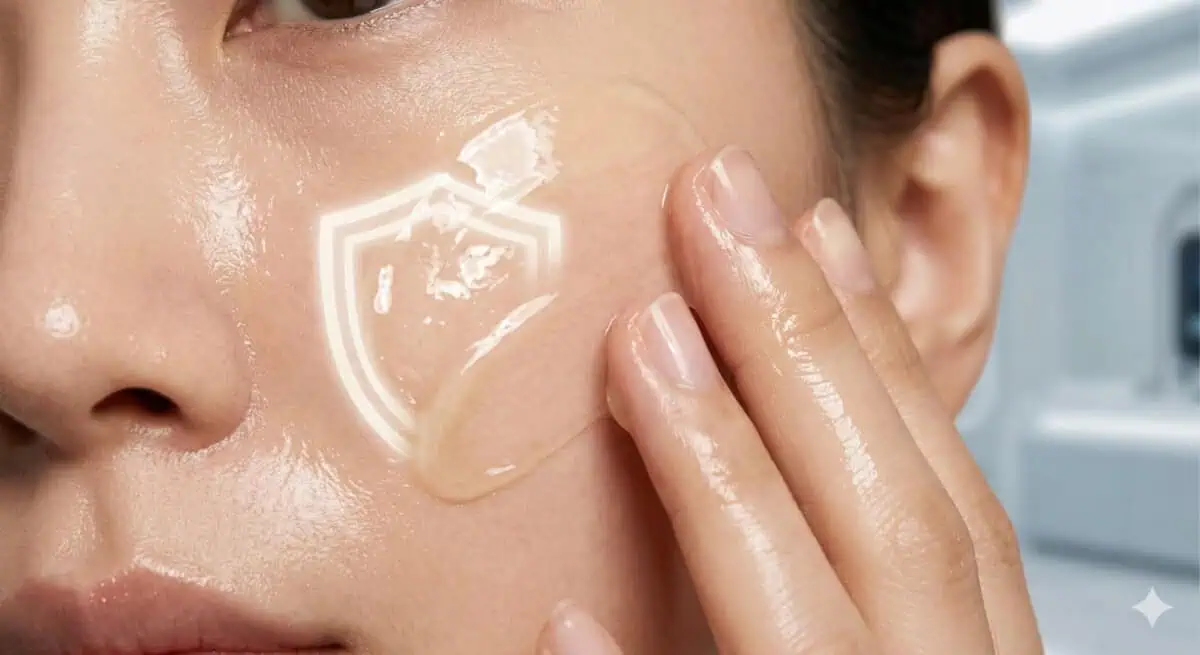
You might think glass skin just means very shiny skin. That’s the most common misread — and it leads to over-layering and a greasy forehead by noon.
“Glass skin shouldn’t make you look sweaty or like a glazed donut. It’s just one step above dewy skin. If you look crazy, you are doing too much.”
— r/kbeauty
“It should appear as though light is shimmering and reflecting off the skin due to its smoothness — not like oil is coming off a cotton pad.”
— r/kbeauty
Glass skin runs on humectants, not moisturizers. Humectants are watery — they do all the hydration work at a cellular level without adding surface weight. Glazed donut skin is the reverse: shine from oil sitting on top. One is structural. One is cosmetic.
Related: Bloom Skin 2026 — The Full Guide
Related: 5-Step Minimal K-Beauty Routine
🪜 How to Build a Glass Skin Routine in 2026
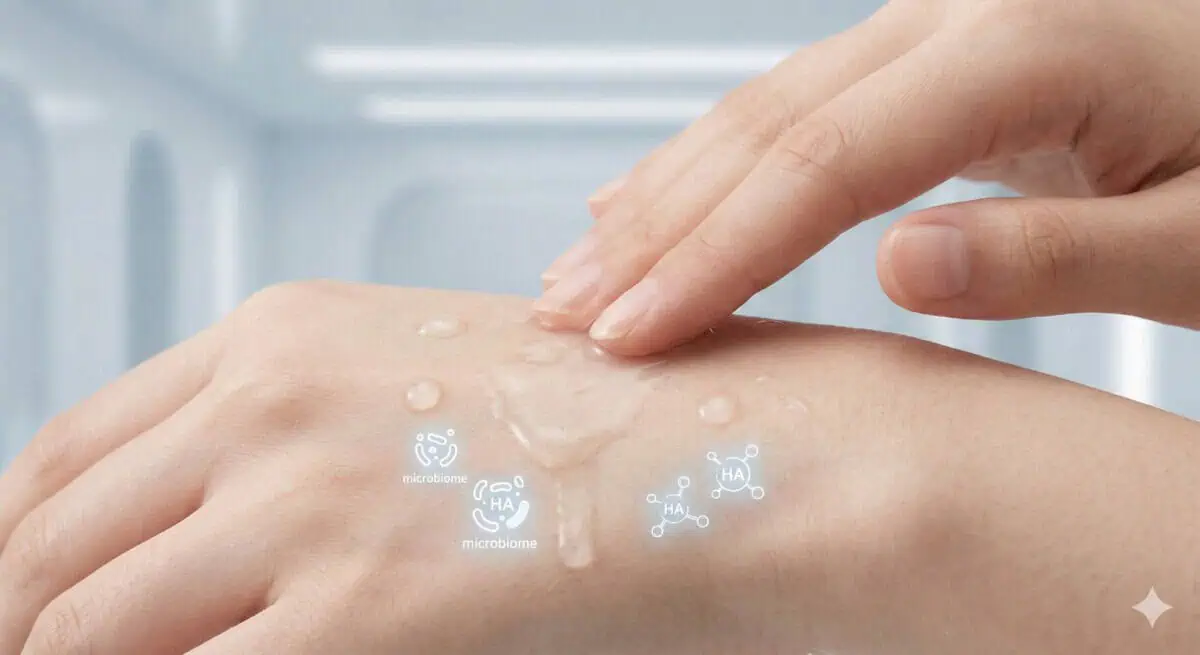
The 11-step routines that went viral in 2017 are largely gone. In 2026 the approach has been simplified — but the logic is identical. The key is layering hydration from thinnest to thickest, consistently, over weeks.
📊 At a Glance: Glass Skin Product Comparison
| Product | Step | Key Ingredients | Best For | Buy |
|---|---|---|---|---|
| COSRX Low pH Cleanser | Step 1 | BHA, tea tree, willow bark | All skin types · acid mantle protection · daily use | Amazon / YesStyle |
| Anua Heartleaf 77% Toner | Step 2 | 77% heartleaf, panthenol, allantoin | Sensitive skin · redness · layered hydration | Amazon / YesStyle |
| Torriden Dive-In HA Serum | Step 3 | 5-type hyaluronic acid complex | Deep plumping · all skin types · fragrance-free | Amazon / YesStyle |
| Pyunkang Yul Moisture Toner | Step 2 / Layering | Astragalus root extract, ferments | Bounce + translucency · dry and combo skin | Amazon / YesStyle |
| Beauty of Joseon Relief Sun SPF 50+ | Step 5 | Rice ferment, grain ferment, PA++++ | Dewy SPF finish · brightening over time | Amazon / YesStyle |
| Medicube PDRN Peptide Serum | Step 3 (2026 upgrade) | PDRN, peptide complex | Cellular regeneration · bloom skin · mature skin | Amazon |
🧴 Product Deep Dives
1. COSRX Low pH Good Morning Cleanser
🌿 Best Foundation Step
The entry point of any glass skin routine. pH 5.5 cleans without disrupting the acid mantle — so everything after it can actually penetrate and work. An r/AsianBeauty staple for years, one of the most reordered cleansers in the K-beauty community.
“I find it really cleansing without the feeling of stripping off my natural oils from my face.”
— r/AsianBeauty
“I started seeing results within a week. My skin felt a lot cleaner and my pores weren’t so gunky. Will repurchase — it’s on its way to HG status for me.”
— r/AsianBeauty, combo skin with cystic acne
Some users with dry skin report feeling tight after washing. Follow immediately with toner while skin is still damp. A small number of users with salicylic acid sensitivity should check the ingredient list first.
→ Check price on Amazon | Buy on YesStyle
Read: Our full 30-day COSRX review
2. Anua Heartleaf 77% Soothing Toner
💧 Best Step 2 Toner
77% heartleaf extract in a watery, fast-absorbing formula. Calms inflammation while delivering layered humectant hydration — exactly what Step 2 is built around. Watery enough to layer 2–3 times without heaviness, which is critical for building glass skin plumpness.
“After using this toner for about two and a half weeks, I’ve noticed a significant improvement in my skin texture. My skin feels more resilient throughout the day, with reduced redness and oiliness.”
— r/AsianBeauty
“I find it to be very gentle, it feels soothing, and helps my skin have a little glow to it.”
— r/KoreanBeauty, sensitive combo skin
This is a hydration and calming product, not an oil-control one. If you’re looking for sebum regulation, pair it with a niacinamide serum at Step 3. A small number of users report sensitivity when used alongside strong actives like retinol or acids.
→ Check price on Amazon | Buy on YesStyle
3. Torriden Dive-In Hyaluronic Acid Serum
💧 Best Step 3 Serum
Five molecular weights of hyaluronic acid working at different skin depths — this is the multi-layer hydration that creates glass-like plumpness from within. Apply a few drops while skin is still damp from toner for maximum absorption.
“I tried it out for the first time this morning, using two drops, and my skin feels so plump and thoroughly hydrated!”
— r/kbeauty
“It’s fragrance-free, gentle, and lightweight. The texture is super light and runny so it spreads easily and absorbs well even with generous amounts.”
— r/kbeauty, combination sensitive skin
Some users find the serum evaporates quickly — if skin feels dry again after 30 minutes, apply in a damp environment or layer twice. In rare cases the 5-type HA can cause mild tingling on very reactive skin; patch test first if you’re HA-sensitive.
→ Check price on Amazon | Buy on YesStyle
4. Pyunkang Yul Moisture Toner
✨ Best Layering Essence
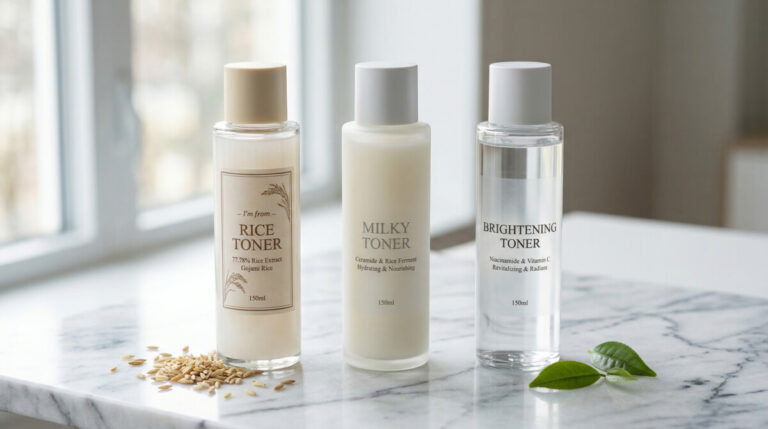
A milk-toner hybrid built for repeated layering. Dense fermented hydration with each application — creating the bounce and translucency that distinguishes real glass skin from surface shine. Use 2–3 light layers after your first watery toner.
→ Check price on Amazon | Buy on YesStyle
5. Beauty of Joseon Relief Sun SPF 50+
☀️ Best Glass Skin SPF
The step that makes or breaks the glass skin finish. Dewy, skin-like texture that doesn’t flatten your glow — and rice and grain ferment extracts that actively contribute to brightening over time.
→ Check price on Amazon | Buy on YesStyle
🍩 Glazed Donut Skin: The Honest Shortcut
Here’s the honest appeal: immediately gratifying, genuinely fun, no weeks of routine-building required. Moisturize well, layer a face oil or balm on top, optionally add a gloss-like finishing serum on cheekbones and the bridge of the nose for photos.
Glazed finish looks intentional on a hydrated base. Applied to dry or dehydrated skin, oils sit patchily and read as greasy. Even two weeks of basic glass skin hydration first makes a dramatic difference in how the finish lands.
🔬 PDRN in 2026: The Bridge to Bloom Skin
Until 2024, PDRN (polydeoxyribonucleotide) was a clinic-only ingredient. By 2026 Korean brands have integrated it into everyday skincare — and it’s the most important development in the glass skin conversation.
Here’s why it matters: unlike hyaluronic acid, which adds water volume at the surface, PDRN works at the cellular level — stimulating DNA repair and regenerating skin cells from within. The result over 4–6 weeks is genuinely denser, more structurally resilient skin that holds hydration better and reflects light more naturally. That lit-from-within quality that defines true glass skin is improved skin density. PDRN is one of the few ingredients that actually gets you there from the inside out.
6. Medicube PDRN Peptide Serum
⚗️ 2026 Upgrade — Step 3
Used at Step 3, this takes the glass skin routine into bloom skin territory. PDRN drives cellular regeneration while peptides support collagen — producing plumper, denser skin that holds hydration better and reflects light more naturally over consistent use.
PDRN serums require patience — most users report visible results after 4–6 weeks, not days. If you’re looking for instant glaze, this isn’t it. If you’re building toward structural skin quality that glazed donut products can sit beautifully on top of, it’s worth the wait.
Related: Korean Rice Extract Toners for Brightening 2026
Related: Bloom Skin 2026 — Complete Guide
🌸 The 2026 Shift: Glass Skin Becomes Bloom Skin
Korean beauty is calling this bloom skin: hydrated, strengthened, even-toned skin that looks naturally luminous rather than deliberately glossy. As integrated facialist April Brodie told Refinery29: “The globally admired Korean glow is not created by viral products or miracle creams — it comes from disciplined routines, skin-barrier respect, and scientifically supported formulations.”
Per ELLE, the ingredients driving bloom skin results in 2026: PDRN (cellular regeneration) · peptides (collagen and elasticity) · Orchistem plant stem cell extract (luminosity) · bio-fermented actives (microbiome balance) · centella asiatica (barrier repair). The direction is away from heavy HA stacking toward targeted, intelligent formulations.
🏷️ How to Read a Glow Skincare Product
- Humectants (HA, glycerin, ferments) appear in the first half of the ingredient list
- Low-pH formula noted — essential for cleansers and toners
- Centella, niacinamide, or barrier-repair actives as supporting ingredients
- Fragrance-free or low-fragrance — glow products should prioritize function
- Community discussion on r/AsianBeauty or r/kbeauty with honest mixed reviews
- Key active appears near the very bottom of the ingredient list — trace amount for label appeal
- Claims “instantly transforms skin” or “reverses aging” — no topical product does this
- Heavy fragrance in a product marketed for sensitive or barrier-compromised skin
- No mention of pH for toners and cleansers
- Zero community discussion or independent reviews anywhere
🎯 Your Skin, Your Choice
DKN Verdict
Glass skin is a philosophy. Glazed donut skin is a finish. They operate on different levels of the same goal — and the smartest approach in 2026 is to use both strategically rather than choose sides.
Build your skin toward glass skin health using a consistent, barrier-respecting K-beauty routine. Add a glazed donut finish — face oil, balm, or glossy serum — whenever the occasion calls for it. The Korean beauty industry has already refined this into bloom skin: less focused on surface shine, more focused on the structural health that makes shine look natural.
Start simple: low-pH cleanser, 2–3 layers of humectant toner, one targeted serum, moisturizer, SPF. Repeat for 4–6 weeks. The comparison question will answer itself.
❓ Frequently Asked Questions
Is glazed donut skin the same as glass skin?
Can I achieve glass skin if I have oily skin?
What is bloom skin and how is it different from glass skin?
How long does it take to achieve glass skin?
Can I combine glass skin and glazed donut skin in one routine?
All product recommendations include affiliate links. We may earn a small commission at no extra cost to you. We only recommend products we have researched and believe are genuinely suitable for K-beauty routines.